

An invitation to practice more-than-human thinking
Practical philosophy for when angels remain silent.

What does more-than-human and multi-species thinking mean?
This is a post about my first attempt to practice this way of thinking in front of others, and to invite you to participate in an ongoing monthly focus I am going to begin, about more-than-human thinking. This will be an invitation into philosophical thinking, but because I am not good with names, I won’t be mentioning or citing great philosophers, or their quotes; this is just about non-human philosophers.
Silent angels
When I think about more-than-human, I recall a book I purchased in an alternative health shop during my late teenage years: Ask Your Angels: A Practical Guide. I was on a quest for understanding, and I needed more-than-human help healing from a secret, evil hurt.
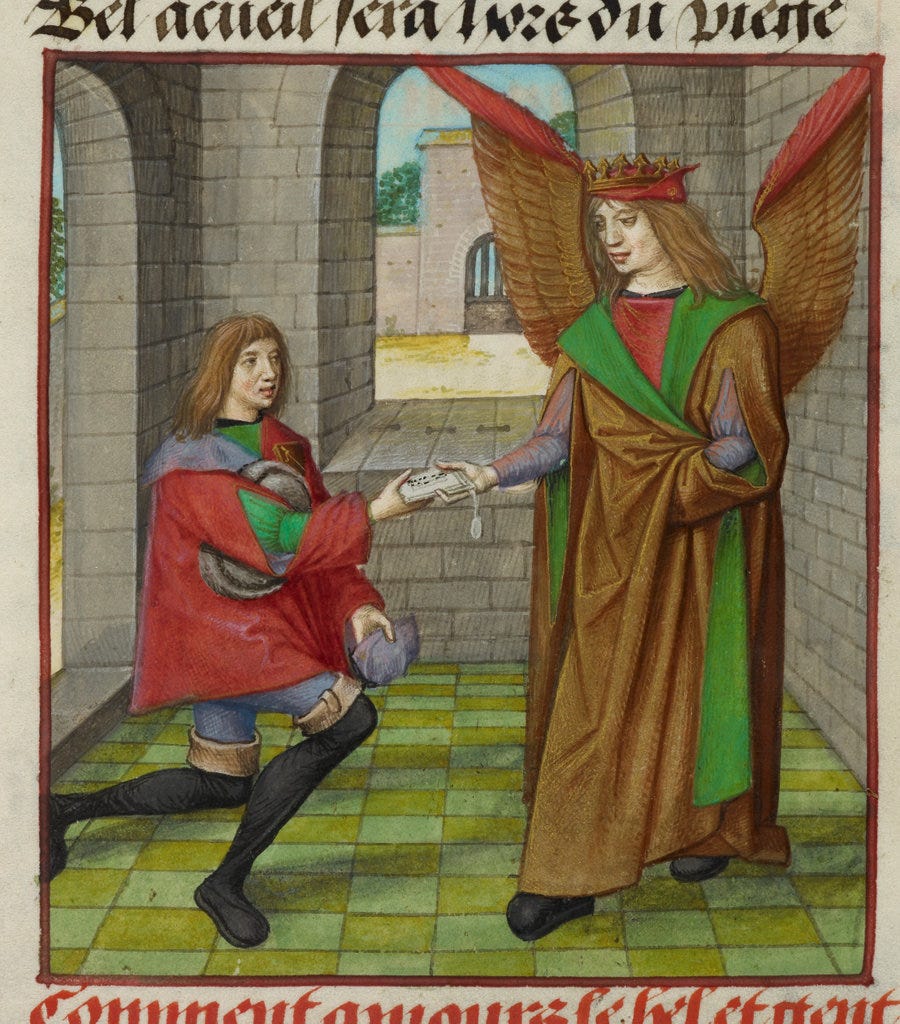
I had no religious or spiritual upbringing or context for understanding badness. I believed in nothing. I couldn’t make sense of the ‘why’. The only religious understanding I could recall as a child was lying awake after a family Hogmanay party when I was around eight years old, thinking about how I had felt strangely afraid of my Catholic Aunties, peering through horn-rimmed glasses, sipping sherry and saying strange words about the devil and being born in sin.
The scam of Sea Monkeys
I diligently practised everything in the practical angel guide. But my angels remained silent. My questions, unanswered. My disappointment was on par with finding out as an adult that Sea Monkeys were not as depicted in my comics. I did not find a vast cosmic conversation beyond the walls of my bedroom. Eventually, it was the mountains of Middle-earth that lifted me rather than angel wings.
These young years of interest in esoterica and mysticism, fueled by library books, the poets and writers of The Golden Dawn, consciousness, fascination with the long line of Freemasons starting from my grandfather and stretching back in the family tree, tarot, dreaming, myth, and folklore, all grew deep roots. I didn’t believe, but I wanted to. From books sprouted a lifelong fascination with how we think, how we learn, how we dream, how we wonder.
It’s almost no surprise, then, that my first PhD-related conference presentation recently felt a bit, er, wacky. It was about belief and imagination in adult learning. A slight pre-quest in my official mixed-methods science PhD topic, it must be said. Although at times I regret my scope, I am tackling complexity, systems thinking, and more than human thinking. I’m yearningly interested in wild pedagogies. There are days I wonder why I am doing all of this. If I just played this project straight, it could be so simple, but something is missing from the deep core of how we are teaching adults. I can hear it. Adult learning is often not good for our well-being, maybe even our human spirit.
A wild fool
At the conference, with my presentation, I felt like a wild fool. This is not actually an intended developmental outcome of a PhD, perhaps, but feeling foolish is something I am beginning to value deeply about myself. Please let me never feel like an expert in anything, ever. Let me not walk in the shadow of humanity’s all-knowing.
In the middle of my presentation, something happened that didn’t happen in the other presentations I watched, but I had been inspired by seeing this in other disciplines.
I lowered and slowed the timbre of my nervous voice, and asked everyone to imagine a different perspective …
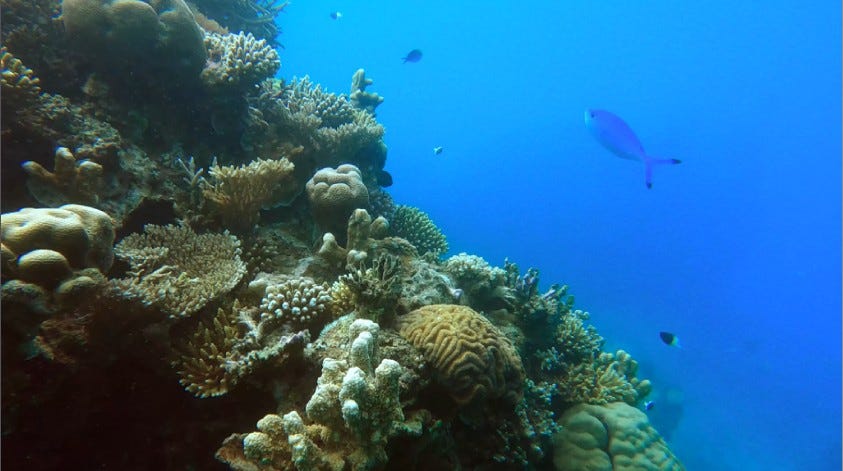
Let's try and shift our minds into a different perspective.
Just imagine you are a green sea turtle swimming
deeply and freely in the vast, cold, clear blue ocean.
Beyond this reef, you discover what seems like
an insurmountable
underwater wall of ice.
It stretches far above you and far below.
Do you swim up to the surface, or do you
swim deeper to explore below? …
This was a shift into a turtle perspective, using a video of a coral reef and my own ambient music as a personal expression of ‘underwaterness’ to play over the very short visualisation:
As a person who is avoidant to group classes of anything, oh how cringe, odd, weird, and embarrassed I felt being the centre of attention in this personal visioning act. I felt like I was laying my inner beliefs bare. My face flamed. I could have melted ice plains on a distant exoplanet with the my lava-bubbling embarrassment. I was burning alive, while pretending to look calm, confident and serious as my video unfolded. Holding myself together, I was far less brave than I had envisioned.
I have decided, though, that if I am to be in any way, genuine, I need to do this in a way that feels right for me. I feel I have always seen the world from an ecological paradigm, before knowing what those two words meant. So when I say I intend to deepen the outer expression of my inner more-than-human perspectives, it’s a commitment to feeling so uncomfortable.
To me, more-than-human thinking is not just keeping other animals in mind, but using this strange tool of unrestrained imagination to wonder what the complex systems of our world would be like and feel like from a different perspective. At worst, I will seem to anthropomorphise; at best, my thinking and writing could expand to have developed much deeper empathy and ways of thinking and feeling.
This way of thinking is not novel or new; it’s ancient. In an earlier keynote at the conference, two astounding leaders and scholars spoke about their research in relation to their Indigenous Australian cultural identity, including their perspectives in relation to totem animals. Although I don’t have such depth of relation to these ancient lands I live on in way to relate to totem species, I want to embrace this feeling of deep discomfort I feel in learning to express my relations with other species, through ecological and relational thinking. I am re-learning to be an ecological being, embracing even dark ecology.
I don’t know where to start. I am still cowering.
An invitation
Each month, I will focus on one species. I will think, learnd and dream about them all month. How they see, sense, live and speculate and wonder about how they might think.
I’ll share a species of focus in advance for anyone who wants to join in.
I guess this is a philosophical experiment or mind-walk of sorts? But I’m not a philosopher.
You may just want to ponder in your own quiet way. You may want to share in the comments. Or, if you feel safer in sent words exchanged back and forth, you can write at wheretheforestmurmurs@gmail.com
In September, I am starting this more-than-human thinking with moths.
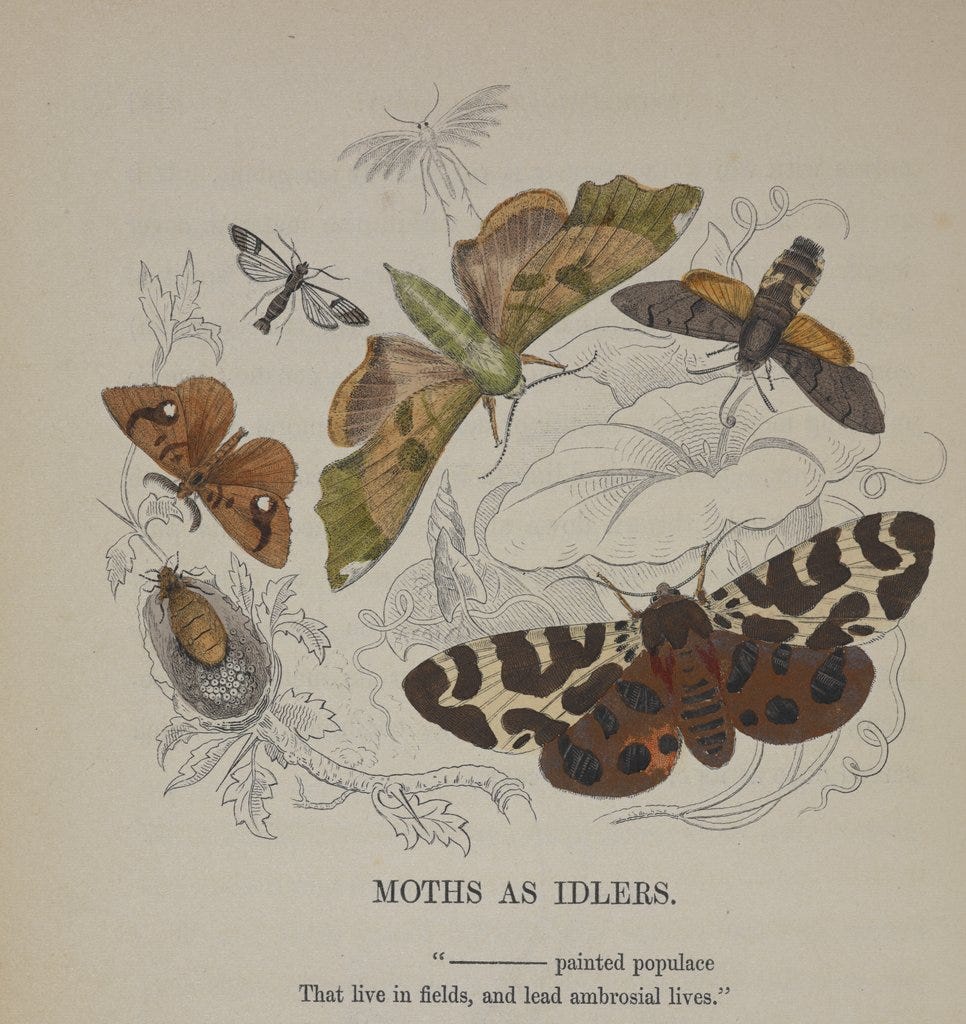
I’ll be sharing ways of asking, thinking and exploring our mental models to imagine moth perspective.
Until my next post, that will flutter to you with moth-like thinking prompts, keep your senses primed and begin to notice how you relate to moths in your daily interactions …