

The impossible binary of the fox
Another wordy, half-formed expression of an unfinished idea

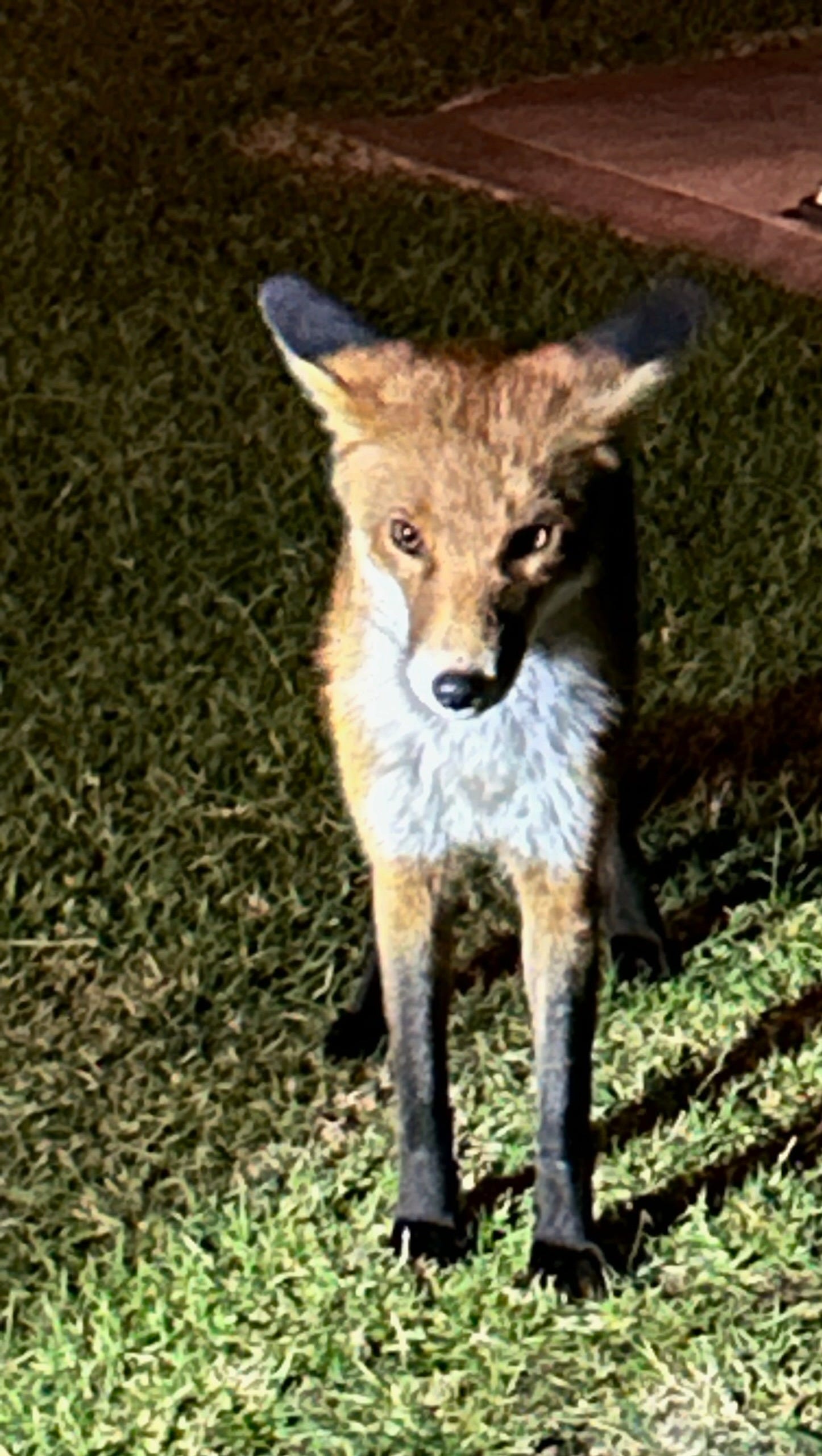
Last night I had a close encounter with a fox. It would take me screens to try to articulate how sad, delighted, awe-struck, and scared I felt. In an Australian biodiversity context, the perspective on foxes is complicated. They were introduced here hundreds of years ago, but their proximity to native animals means that they are most often hated and baited. Poison is a terrible, slow death. Perceived as outsiders and predators, they are guilty by proximity. When I was a volunteer monitoring beach nesting birds, I tried to make sense of the human default behaviour to destroy foxes. I was supposed to help find the fox den. I couldn’t do it. From an evidence basis, there were more car tyre tracks in beach sand around nests than there were fox prints. Human activity seemed to be killing because their nests were on beaches that allowed cars. Still, the nearby family of foxes were the evil presence. This binary way of perceiving goodness or badness seems so at odds with the complex web of life.
Yet I have screamed, cried and banged a wooden spoon on a pan lid at a fox for massacring my chickens and ducks. I have also wept and trembled in their beauty countless times, my breath catching as a fox runs out of low cloud in the golden sun on an autumn morning. I deeply adore-fear these animals. The fox is born into a context, here, forced into a binary of narratives, extremely hated for doing nothing more than existing, looking like a fox and having a will to survive.
All I can tell you is that under that golden-eyed gaze, I become the irrational being I am. Under that gaze, I equally hold myself together in a place more comfortably with being rational and scientific too, alongside a sense of mystic wonder. I can be all iterations of myself when a fox gazes at me, just as their identity shifts and changes with context. To me, being complicated and harbouring a shape-shifting identity is a beautiful common thread in all animals. We are contextual and relational. We should meet the fox’s gaze and understand the fox like this.
Touching too, that this fox appeared on the night of a day when, for the first time, I had properly cried about the death of thousands of marine animals and plants in the wild waters that have grown me. I have felt numb for months about this, and in trying to share the truth and reality of the situation, I found myself annotating the photographs of devastation with the word ‘hope’. I think I even apologised for expressing my grief. I felt sorry for feeling anything.
The trigger for what felt like proper grief was a twelve-minute interview with Anohni on ABC Radio National. I’m not going to rewrite what she said here, I think you should just take twelve minutes and listen. The song Manta Ray with Anohni and J. Ralph has been my soul poetry through years of studying and writing about biodiversity loss. I cry in the way I need to, every time I hear it, but in the last few weeks, those tears have not been coming as easily.
Yesterday, I sobbed in the shower after twelve minutes of Anohni’s beautiful voice, hearing a message that hope is not what we need. I have read this perspective academically so many times, in dark ecology and in seeking traditional ecological ways of knowing. I thought I was already inhabiting this third space of perception, of seeing in between dark and light, of despair and hope. Feeling lost between two binaries is a space I have existed in for longer than I can understand. Yet, I was reading and listening, but I wasn’t hearing. I was still waving a flag of hope. Holding onto that default, dominant narrative. Until yesterday. It sometimes takes a musician to help you learn to listen.
So, I ditch hope for the harder work. This is the way, the harder way of belonging between, to both, and all extremes of a continuum. Feeling mystically connected to the universe because of a fox, who in reality, is only standing in the car headlights and approaching humans because, in this dry, waterless autumn, things are desperate out there. The fox is biologically seeking survival, risking human interaction that could kill it, and yet, here I am, also appointing it as my mystical messenger from the broader universe. It’s ok that this is absurd. The fox and I can be both and all to each other. We each take a risk in believing in our mysteries. We can’t understand each other wholly It’s complex and I see that we can’t navigate this shitstorm of feeling of love-grief with that one extreme of hope. Hope extinguishes complexity; it simplifies. It reduces.
I can see the way hope obscures learning and feeling, in the way people around me are talking about the impending cyclonic winds forecast over the next few days, saying that these winds will simply disperse the marine algal bloom. The rains will wash it all away. Wash what away? The deaths of thousands? No one is mentioning preparing ourselves for the grim scenes possibly ahead. As everything dead in the ocean washes up on the swelling waves onto the sandy shores. Even the gentle tides have brought thousands of bodies already. So yes, I fear our beaches will be full of dying, stinking algae, plants and dead rotting marine life. I will not turn away from the horror. I fear the sea will regurgitate what it has only been slowly gagging on. I see a coming trauma in the storm. But what do I know? I will see that, if that’s what happens.
And being beyond hope, I will tackle an unexpected outcome of putting some words in a letter, writing to our Environment Minister. I now have the opportunity to be listened to by government leadership. I didn’t expect this, and I feel sick about it. I immediately felt like a fool for even writing. Who am I? I think they probably offer this to everyone who writes, and it’s not because I am a PhD student in sustainability education. Was that the first flicker of ego ever in me when I wondered that? I never seek audience, because deep down I have never really thought I have importance, and I feel strangely content at being nothing. Yet, I have grown. I can feel I need to get over my unease, rather than hoping others who are more articulate and important than I am are doing it. Is it just possible that I can believe that I do have ideas that might be worth sharing? Reading my letter, I now cringe because, of course, I mention that from our leaders, we need messages of hope. The first thing I will do when I speak is bravely walk back from that. Please, I will say, please don’t give us hope.
Moving on from hope, I can be more helpful living in grief, horror and fear. I will tend the plants in my garden, love the bees, and my grief will deepen there into a darkly sweet loam for growing so much more. In my letter, I outlined my deepest question. Why, when thousands of animals and marine plants have died in the last few months, can we not call this a disaster event? This event already impacts humans who are using the ocean as a service, but far more than that, why is it only the human death count that triggers the word disaster/emergency response?
In future (and we WILL be dealing with more marine algal blooms, this we know), can biological collapse be the love-feared golden-eyed creature that, in a horrible romantic splendour of terror, strangely helps us to fall in love enough to do something while the horror unfolds now, rather than just hoping that the rain will wash it all away?
I think this is ecological thinking.
Yes love this complexity, and avoiding absolutes. Hope indeed can be misleading when what we need is action and change and a thriving environment