

The moth and the moon
Experience and innocence and more-than-human thinking

I set myself a goal for September of practising more-than-human thinking. It was to answer an overarching question that writer Amitav Gosh poses so succinctly: “So how do we find a way of giving a voice to non-human entities?”.
I am really interested in exploring that “way”.
I posed four questions:
How do particular events (emergence, appearance, being drawn to light) reshape my encounters with moths and the meaning I give to their presence?
What recurring pattern in moth behaviour (nocturnal flight, attraction to flame or light, or migration/gathering) feel like a metaphor for my human experience?
.. etc. You can read the questions in my previous post.
These questions suck!
These questions suck, don’t they? I can laugh now. So beautifully naive I am, as some sort of fledgling wanna-be philosopher. I thought that by the end of the month that I would be able to write a passage from the perspective of a moth.
But I could not grasp it.
Halfway through the month, I unravelled my premise:
Every time I see a moth, it is because it is crazed, lost and disoriented, in unnatural light.
Every experience of those night-flying moths that primarily, but not exclusively, inhabit darkness in our realm is held in an apocalyptic dawn of light for them.
Where I have previously marvelled at experiences in science, such as setting up a white sheet in the dark and shining a torch on it to measure the local biodiversity of night-flying moths, I feel uncomfortable about seeking this experiential interchange with moths.
We do this so that we can translate moths into our language of mathematical quantification and based on experience, empirical knowledge. We are wrangling moths into our light world, chasing the experience of them, disorientating the moth to assign them a number and a meaning for us. It seems like such a barbaric act in translation. It seems much better for the moth if our species does not see them, or perhaps only encounters moths flitting on a moonlit night through a dark forest, at best.
In the towers of bees and flowers
So I feel like the start of this grand thinking experiment in more-than-human thinking is very shaky. I think I may be asking the wrong questions, all based on experience.
Now, I am trying to shift my question to the question that I could ask if I had no experience with moths. As if I were new to the world and still imagining the reality of it. If I were innocent of the act of shining artificial light on the world. I am trying to redraw the circle of my understanding. I am thinking about experience and innocence, because I have been reading and feeling illuminated by the words of William Blake a lot recently. I can’t help myself.
I noticed myself pinning a bee and a flower onto my jumper last week, together and wondering why.
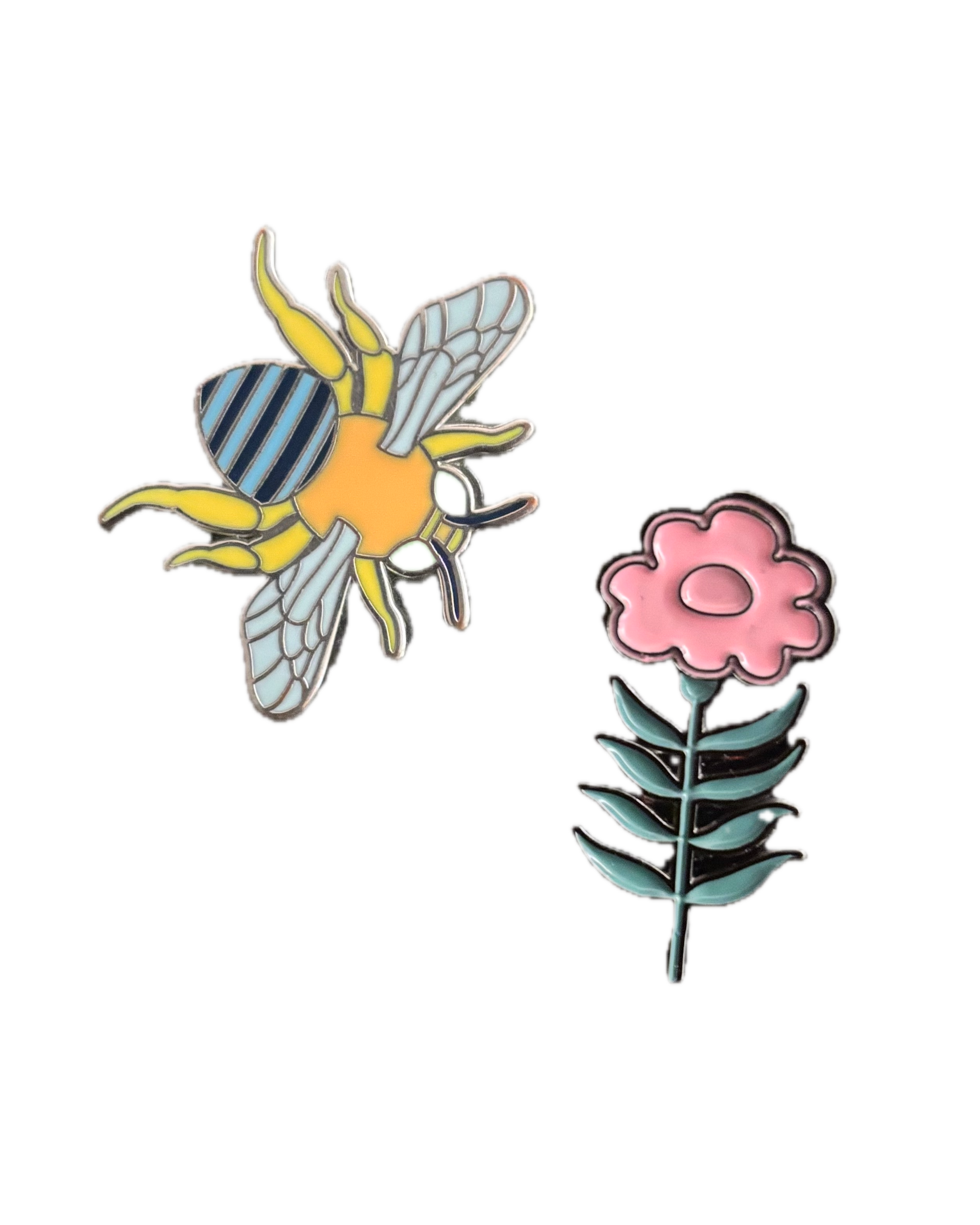
Noticing this distracted difference I made sparked thinking about mutualistic relationships in ecology. For example, we think of a bee and a flower as mutualistic, when in fact it is far more complicated than a simple exchange. Sometimes a bee is not beneficial for a flower, and vice versa. Stephen Buchmann, author of the incredible book What a Bee Knows: Exploring the thoughts, memories, and personalities of bees, describes the relationship of bees and flowers as “a love story, an arms race, or perhaps something in between” (p.77). In truth, the complex relationship between bee and flower can be diabolical, for both seemingly lead to the most extraordinary physical adaptations and behavioural attempts to seemingly outwit, exploit and cheat each other. There is no singular experience of being a flower or of being a bee.
The moon, the moth.
So my questions, intended to illuminate my thinking like a moth, seem foolish because they are rooted in experience in my reality, mostly. They aren’t philosophical at all; they are more of the scientific mind. More akin to taking a Newtonian nap rather than awaking into deeper questions, like: What does a moth dream? What is the moon to the moth? I realised that if I start with the moth’s relationship with the moon, I start with a symbol and an archetype - the moon. This seems like more of a place to begin thinking, in the freedom of my imagination.
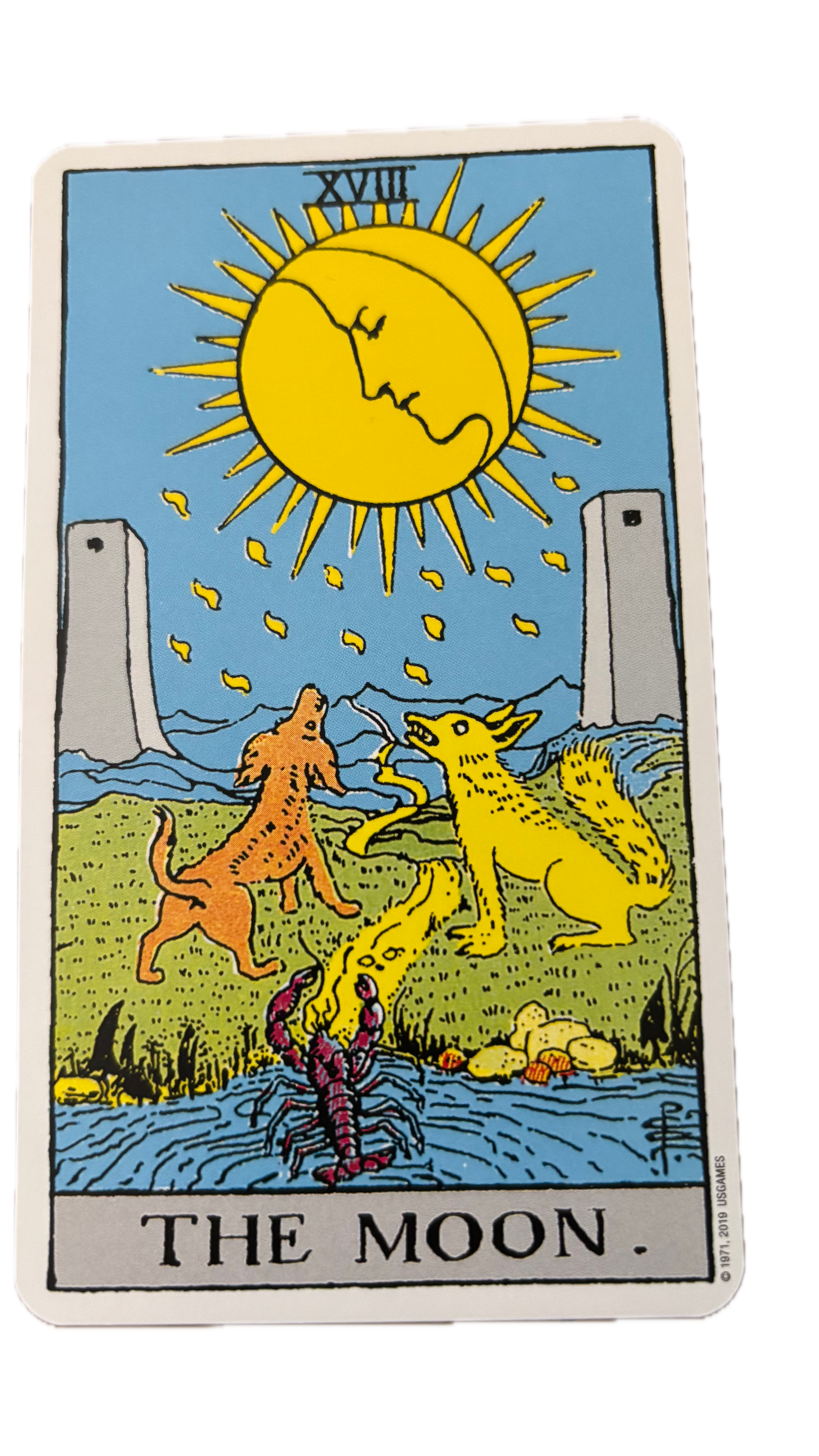
To recall Blake’s warning: “Kill not the Moth nor Butterfly/For the Last Judgement draweth nigh’. On first read, I thought that ‘Judgement’ was the important contextual word in that phrase; now I think it’s ‘draweth nigh.’ How to come closer? How to approach? When the moon draweth nigh, how does that repeating cycle and pattern relate to the moth? How does that cycle relate to me? To us? What is the subjective and collective reality of the moon?
So, the only goal I have now is to come up with better questions for more-than-human thinking about moths. For imagination. That’s it. That’s all the next door is. I’ll try to open it soon and share the questions if/when they approach. 🌝
Blake, W. (ca. 1802-04). Auguries of Innocence. Morgan Library & Museum, New York. https://allpoetry.com/Auguries-of-Innocence
This poem has been rattling around in my head for weeks now.
Billingheimer, Rachel V. (1990). Wheels of Eternity: A Comparative Study of William Blake and William Butler Yeats. Gill and Macmillan, Dublin, Ireland.
(This book isn’t mentioned in the above post, but I have just started reading it, as so far it has been a significant influence in paring back my thinking to symbolic and archetypal thinking)
Buchmann, S. L. (2023). What a bee knows: Exploring the thoughts, memories, and personalities of bees. Island Press.
I know this is about moths, not bees, but this book shifts thinking into areas of thinking about more-than-human species to ask questions that we might not usually be prepared to ask.